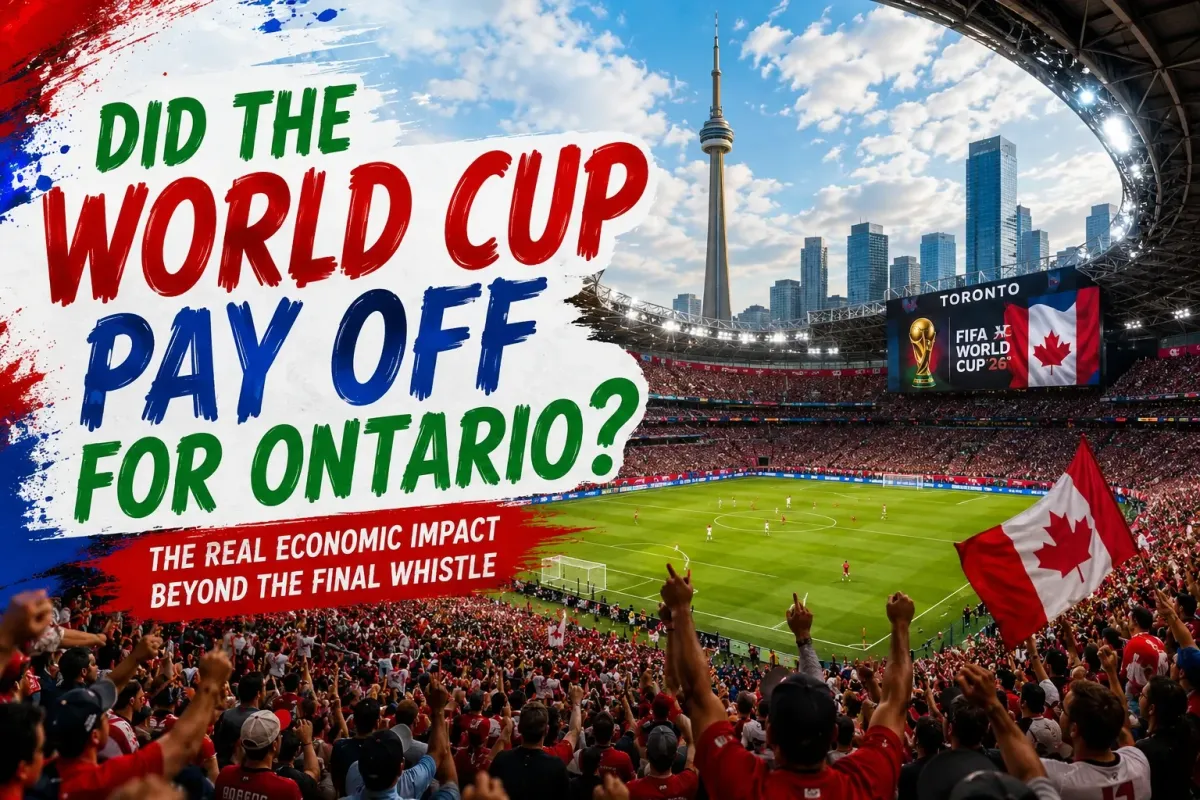
Did The World Cup Pay Off For Ontario?
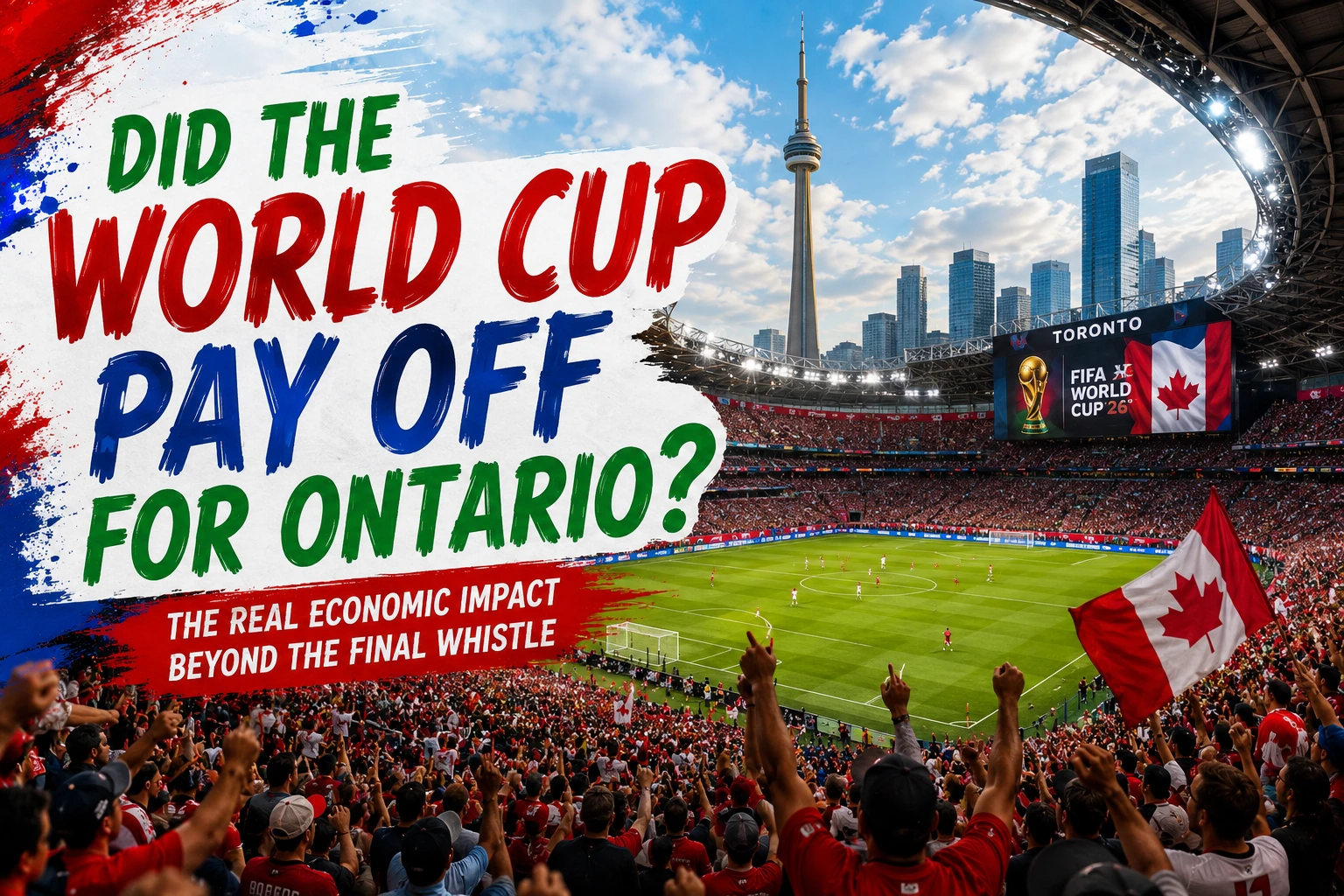
On a warm summer evening in downtown Toronto, the signs of the World Cup are difficult to miss.
Crowded patios spill onto sidewalks. Transit stations are busier than usual. Restaurants are packed with visitors speaking a mix of languages from around the world. Hotel lobbies that might normally see a steady flow of business travellers are filled with soccer supporters wearing national team jerseys and carrying match tickets.
For many Ontarians, the atmosphere feels exciting. For local businesses, it feels profitable.
The question, however, is whether the FIFA World Cup has delivered the economic payoff that governments, tourism organizations, and business groups anticipated when Canada secured its role as a host nation.
The answer depends largely on how success is measured.
If the goal was to generate excitement, attract visitors, and showcase Ontario to a global audience, the tournament has undoubtedly succeeded. If the goal was to create a transformative economic boom that permanently changes Ontario's financial outlook, the picture becomes more complicated.
Like most major international events, the World Cup appears to be generating real economic benefits. The challenge is determining how much of that activity represents lasting growth and how much is simply temporary spending concentrated around a few weeks of competition.
The Visitors Have Arrived
One of the most visible impacts of the tournament has been the influx of visitors.
Unlike many sporting events that attract primarily domestic audiences, the World Cup draws international travellers willing to spend significant amounts on transportation, accommodations, dining, entertainment, and tourism activities.
For Toronto, that means visitors are spending money not only inside stadiums but throughout the city.
Hotels, restaurants, bars, retail stores, ride-sharing services, attractions, and entertainment venues all stand to benefit from increased activity.
The effect extends beyond downtown Toronto.
Many visitors choose to explore surrounding communities before or after matches. Day trips to Niagara Falls, excursions throughout Southern Ontario, and visits to nearby attractions create economic activity that spreads beyond the immediate host city.
This ripple effect is often overlooked when discussing major sporting events.
A visitor who travels to Ontario for a World Cup match may also purchase meals, visit attractions, book accommodations, and participate in activities throughout the region. The spending generated by a single visitor frequently extends far beyond the cost of a match ticket.
A Boost For Hospitality And Tourism
Few industries stand to benefit more directly than hospitality.
Hotels have reported increased demand during tournament periods. Restaurants located near fan zones, transit hubs, and entertainment districts are experiencing higher customer volumes. Bars showing matches often attract large crowds, particularly when major football nations are competing.
For many businesses, the World Cup represents an opportunity to generate revenue during a concentrated period of heightened activity.
Tourism operators are similarly positioned to benefit.
Visitors arriving for sporting events frequently seek additional experiences while in the region. Museums, attractions, cultural sites, and entertainment venues often experience increased demand as tourists extend their stays.
For Ontario, one of the long-term benefits may be exposure.
Millions of viewers worldwide are seeing images of Toronto and Canada throughout tournament coverage. While the direct economic value of that exposure is difficult to quantify, destination marketing organizations have long argued that global visibility can influence future travel decisions.
The theory is simple: a visitor who enjoys Ontario during the World Cup may return years later as a tourist.
The Infrastructure Question
Supporters of major international events often point to infrastructure improvements as part of the economic benefit.
Preparing for a tournament of this scale requires investment in transportation systems, public spaces, event facilities, security operations, and visitor services.
Some of those investments may continue delivering value long after the tournament ends.
Transit improvements, public realm enhancements, and technological upgrades can provide lasting benefits for residents and businesses alike.
Critics, however, frequently raise concerns regarding costs.
Major sporting events rarely occur without significant public spending. Security requirements, operational planning, staffing, and infrastructure preparation can create substantial expenses.
The challenge for policymakers is determining whether the long-term benefits justify the investment.
This debate is not unique to Ontario.
Host cities around the world have wrestled with similar questions before and after major events ranging from Olympic Games to World Cups.
The answer often depends on whether improvements were necessary regardless of the event itself.
Not Every Business Benefits Equally
One of the common misconceptions surrounding major sporting events is the assumption that everyone benefits equally.
In reality, economic impacts are often concentrated.
A restaurant located near a fan zone may experience a significant increase in customers. A business located several kilometres away may notice little difference.
Hotels, transportation providers, entertainment venues, and tourism-related businesses typically see the greatest gains.
Other sectors may experience only limited benefits.
This does not diminish the economic value being created. It simply highlights that economic gains are rarely distributed evenly throughout an entire region.
The World Cup creates winners, but not necessarily across every industry.
The Value Of Global Attention
Perhaps the most difficult benefit to measure is exposure.
Ontario is receiving international attention that would otherwise cost enormous sums to replicate through traditional advertising campaigns.
Television broadcasts, digital media coverage, social media content, and travel-related reporting are introducing global audiences to Ontario's cities and attractions.
This type of visibility has value.
The challenge is that it cannot easily be measured through immediate revenue figures.
The true impact may not become apparent until years later through increased tourism, investment interest, or broader international recognition.
Some benefits appear instantly. Others emerge gradually.
So, Did The World Cup Pay Off?
The answer is likely yes, but perhaps not in the way many people imagined.
The World Cup has generated economic activity. Visitors are spending money. Hotels are filling rooms. Restaurants are serving more customers. Tourism operators are benefiting from increased attention.
Those gains are real.
At the same time, the tournament is unlikely to transform Ontario's economy.
No sporting event, regardless of scale, can permanently solve affordability challenges, housing shortages, infrastructure needs, or broader economic concerns.
What it can do is create a concentrated period of economic activity, attract international attention, and provide opportunities for businesses positioned to capitalize on increased demand.
In that respect, the World Cup appears to be delivering exactly what major international sporting events typically deliver.
Not an economic miracle.
Not a transformational boom.
But a meaningful, measurable boost that extends beyond the final whistle.
For Ontario, that may ultimately be enough.