
How Safe Is Cycling in Toronto and the GTA? What Every Rider Should Know
Cycling in Toronto is no longer a fringe activity. It is part of the city’s daily rhythm. From early morning commuters navigating downtown streets to weekend riders along the waterfront, the number of cyclists continues to grow across Toronto and the GTA.
But with that growth comes a more direct and pressing question.
How safe is it, really?
The answer is layered. Cycling in Toronto and the GTA offers clear advantages, but it also comes with real and persistent risks. Understanding both sides is what allows riders to move confidently through the city.
The Current State of Cycling Safety in Toronto
Toronto has made measurable progress in recent years. The expansion of protected bike lanes across key corridors has improved accessibility and reduced exposure in certain areas. Streets like Bloor and Richmond have become examples of how infrastructure can support safer cycling.
There is also a noticeable shift in awareness. Drivers are more accustomed to sharing the road with cyclists than they were a decade ago. Cycling is no longer seen as an exception. It is part of everyday traffic.
However, progress does not eliminate vulnerability.
Cyclists remain physically exposed. They depend on the behavior of drivers, the quality of infrastructure, and their own ability to anticipate movement around them. Safety is not guaranteed. It is actively managed, moment by moment.
Where Cycling Feels Safe and Predictable
In well designed parts of Toronto, cycling can feel controlled and efficient.
Protected bike lanes provide physical separation from traffic, which significantly reduces risk. Routes through the downtown core and along the waterfront offer consistency. Riders know where they can position themselves and what to expect from surrounding traffic.
These environments are particularly important for newer cyclists. They create a sense of predictability that allows riders to focus on movement rather than constant threat assessment.
For many, these areas are where cycling becomes a viable daily option rather than an occasional activity.
Where the Risks Increase
Step outside these protected corridors and the experience changes quickly.
Many streets still rely on painted bike lanes or no designated space at all. Without physical separation, cyclists share lanes with vehicles traveling at higher speeds. This increases both exposure and unpredictability.
Intersections remain one of the most critical points of risk. Turning vehicles, limited visibility, and timing conflicts create moments where even experienced riders must stay fully alert. A single miscalculation, by either a driver or a cyclist, can lead to serious consequences.
The inconsistency of infrastructure is a defining issue. A safe route can transition into a high risk environment within a few blocks. Riders are expected to adapt instantly.
The Human Factor on the Road
Infrastructure is only part of the equation. Behavior plays an equally important role.
Most drivers in Toronto are not intentionally dangerous, but attention varies. Distracted driving remains a concern. Sudden lane changes, door openings, and incomplete checks before turns are among the most common hazards cyclists face.
At the same time, cyclists must operate with a high level of discipline. Visibility, signaling, and positioning are not optional practices. They are essential for survival in mixed traffic environments.
There is a shared responsibility on the road, but the consequences are not shared equally. Cyclists carry the greater physical risk.
Weather as a Risk Multiplier
Toronto’s climate adds another layer of complexity to cycling safety.
Rain reduces traction and visibility. Roads become slick, braking distances increase, and visibility between drivers and cyclists decreases. Even routine commutes require more caution.
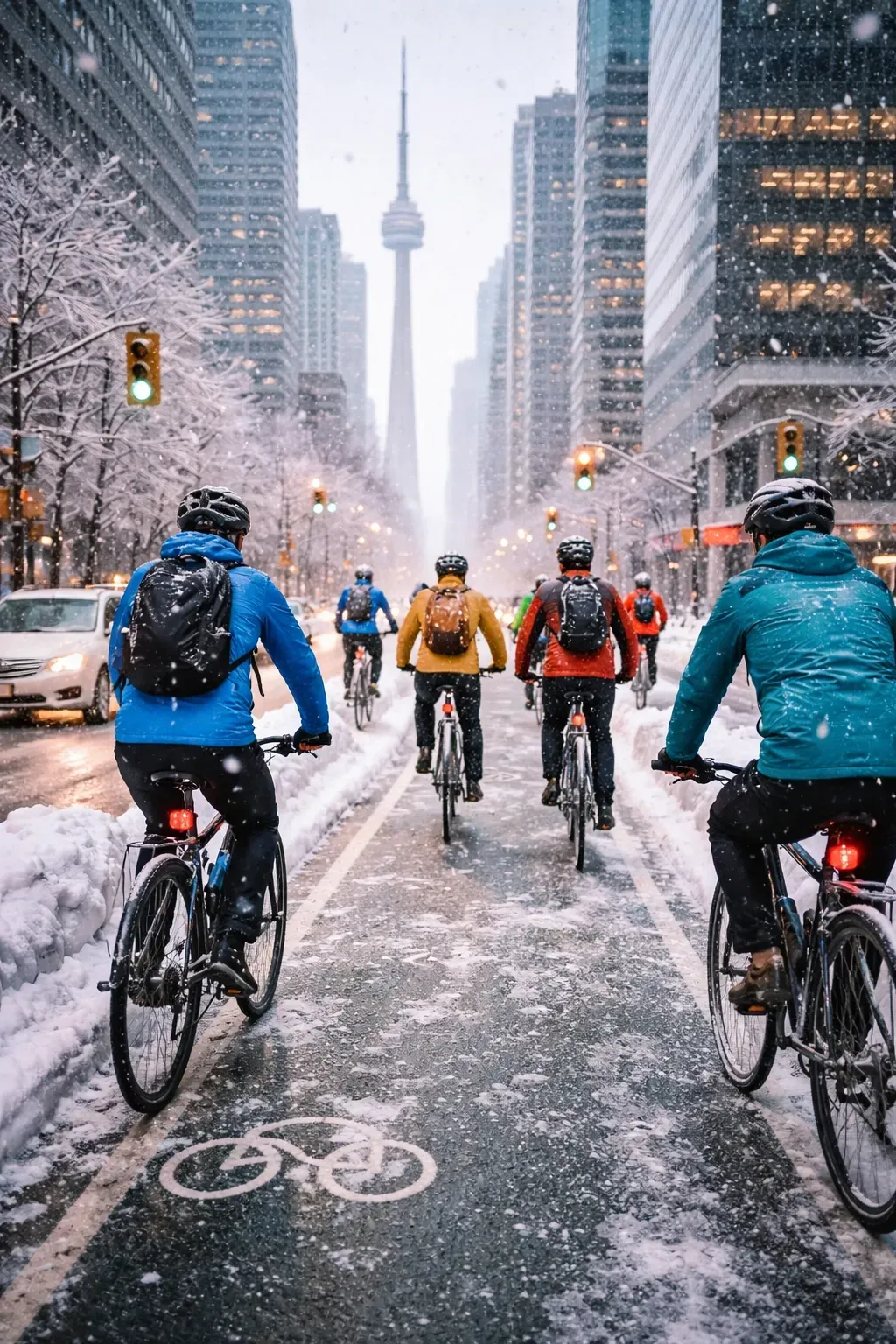
Winter introduces additional challenges. Snow, ice, and road salt create unstable conditions. While some cyclists continue year round, many step away during colder months due to increased risk.
Weather does not just affect comfort. It directly impacts safety.
The Suburban Divide Across the GTA
Cycling in downtown Toronto is one experience. Cycling in the broader GTA is another.
In cities like Mississauga, Brampton, Vaughan, and Markham, infrastructure is often less integrated. Roads are wider, traffic moves faster, and distances between destinations are longer. Dedicated cycling lanes are less consistent, and connectivity between routes is limited.
For many residents in these areas, cycling becomes recreational rather than practical. Trails and parks provide space for riding, but they do not always support daily commuting.
This creates a clear divide between urban and suburban cycling realities.
Practical Safety Habits That Make a Difference
Cycling safely in Toronto and the GTA is not about eliminating risk. It is about managing it effectively.
Experienced riders rely on consistent habits:
Choosing routes with lower traffic or protected lanes
Maintaining high visibility, especially in low light conditions
Anticipating vehicle movement before it happens
Controlling speed in high density areas
Staying alert at intersections, regardless of right of way
These practices are not advanced techniques. They are baseline expectations for navigating the city safely.
A City Still in Transition
Toronto is evolving, but it is not complete.
Infrastructure continues to expand, but not evenly. Awareness is improving, but not universal. Cycling is gaining acceptance, but it is not yet fully supported across all areas of the GTA.
The city is in a transitional phase where progress is visible, but gaps remain.
For cyclists, this means adapting to a mixed environment where conditions can change quickly.
The Bottom Line
Cycling in Toronto and the GTA can be safe, but it is not automatically safe.
It offers efficiency, cost savings, and health benefits that are difficult to match. At the same time, it requires awareness, preparation, and discipline.
Riders who understand the environment and respect its risks are able to navigate it effectively. Those who underestimate it face a different outcome.